I AM AN EYEWITNESS
As the war intensified, Herat fell. My wife, who had witnessed Taliban oppression in her childhood, along with our daughters, were anxious and fearful. I clearly felt the danger as well. The Taliban did not even spare artists; Mr. Khash, a well-known comedian, was executed while tied up.
I hid in our house, unable to venture outside. Over three days, we hurriedly sold some household items and left others behind. Many of my photography equipment were sold for a meager price. The shop owner exploited our situation, holding $1800 worth of my belongings and threatening to report me to the Taliban as a spy. Fear had completely taken over us.
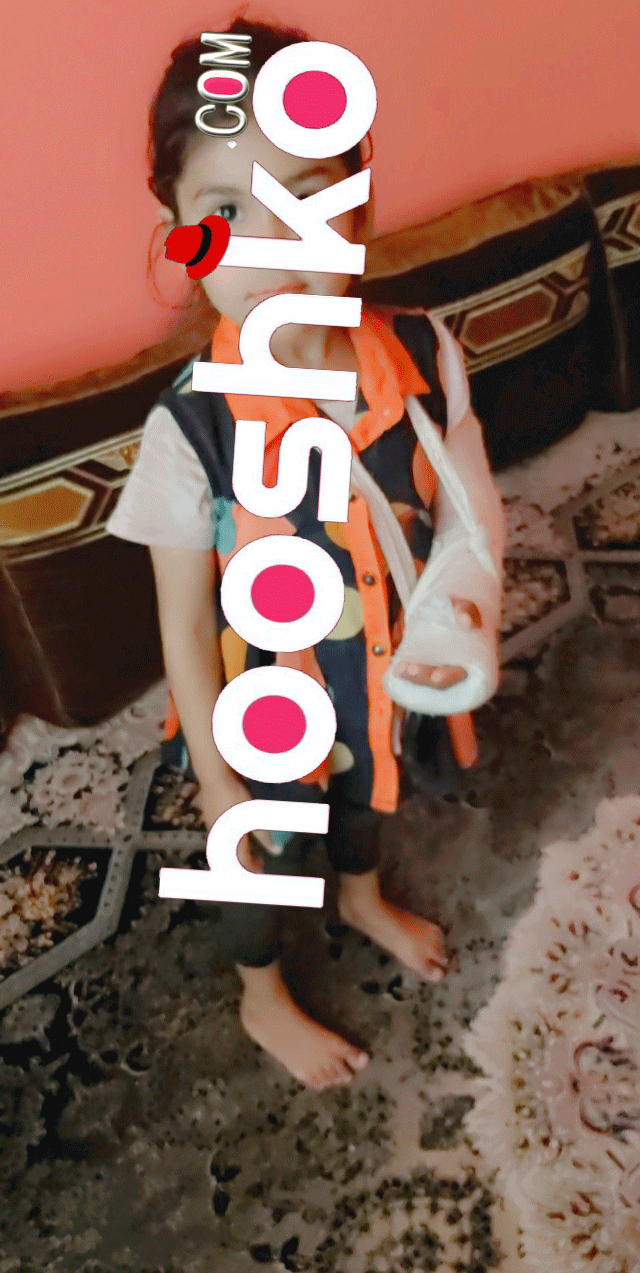
With three backpacks containing a few clothes, personal documents, and an old small wedding gift pot, we started moving toward Nimroz with the help of an acquaintance. My daughter Tamana had a broken arm, which made travel more difficult. Looking back, it is miraculous that we were not stopped or caught by the Taliban along the way.
After two days of continuous travel, we reached the Iran-Pakistan border. We could see the fences clearly. Suddenly, Pakistani border forces captured us and handed us over to militia members, who seemed to be coordinating together. Along the way, I threw my original project documents out of the car for safety. We were in the cargo area of a Toyota.
After three days of captivity, hunger, and humiliation, we were freed with a payment of $1000. About twenty people, including women and children, were imprisoned in the same ruin. We experienced thirst to the brink of death, scorching sun, and children suffering gastrointestinal illnesses. Reliving these moments is very difficult.
Eventually, at night, we were transferred to the Iranian border and handed over to traffickers who would take us inside Iran. The journey was full of dangers: police shootings, vehicle accidents due to speed, kidnapping, sexual assault, organ trafficking, and many other threats. After about five days, we reached Tehran, exhausted, hungry, and dirty, but we had escaped the Taliban.
In the first two years, participating in Iran's police registry program allowed us relatively safe mobility and work. However, my daughters’ education faced challenges due to administrative miscoordination. In the third year, hostility against Afghan migrants intensified. Many Afghans were beaten and tortured by racist individuals. Waves of forced deportation began and continue. During Israel’s attack on Iran, we, like everyone else, feared missile strikes. After surviving, the deportation waves intensified again. For the last two years, I have been mostly housebound, deprived of work, education for my daughters, and even free movement in parks or streets. We live in constant fear of arrest and forced deportation. Opportunists exploit our situation, seizing our money and property as we have no legal protection.
Now, broken and with life’s vitality almost gone, I occupy myself with artificial intelligence, website creation, and skill development, hoping that one day either I may die peacefully or be transferred to a safe country.